
The DeSantis Dummymander
How Florida Gov. Ron DeSantis is orchestrating an end run around Florida law to assist Republicans in keeping their fragile U.S. House majority

Republicans are in electoral trouble around the country for the 2026 midterms. Florida Republican Gov. Ron DeSantis has a gambit to ease their troubles.
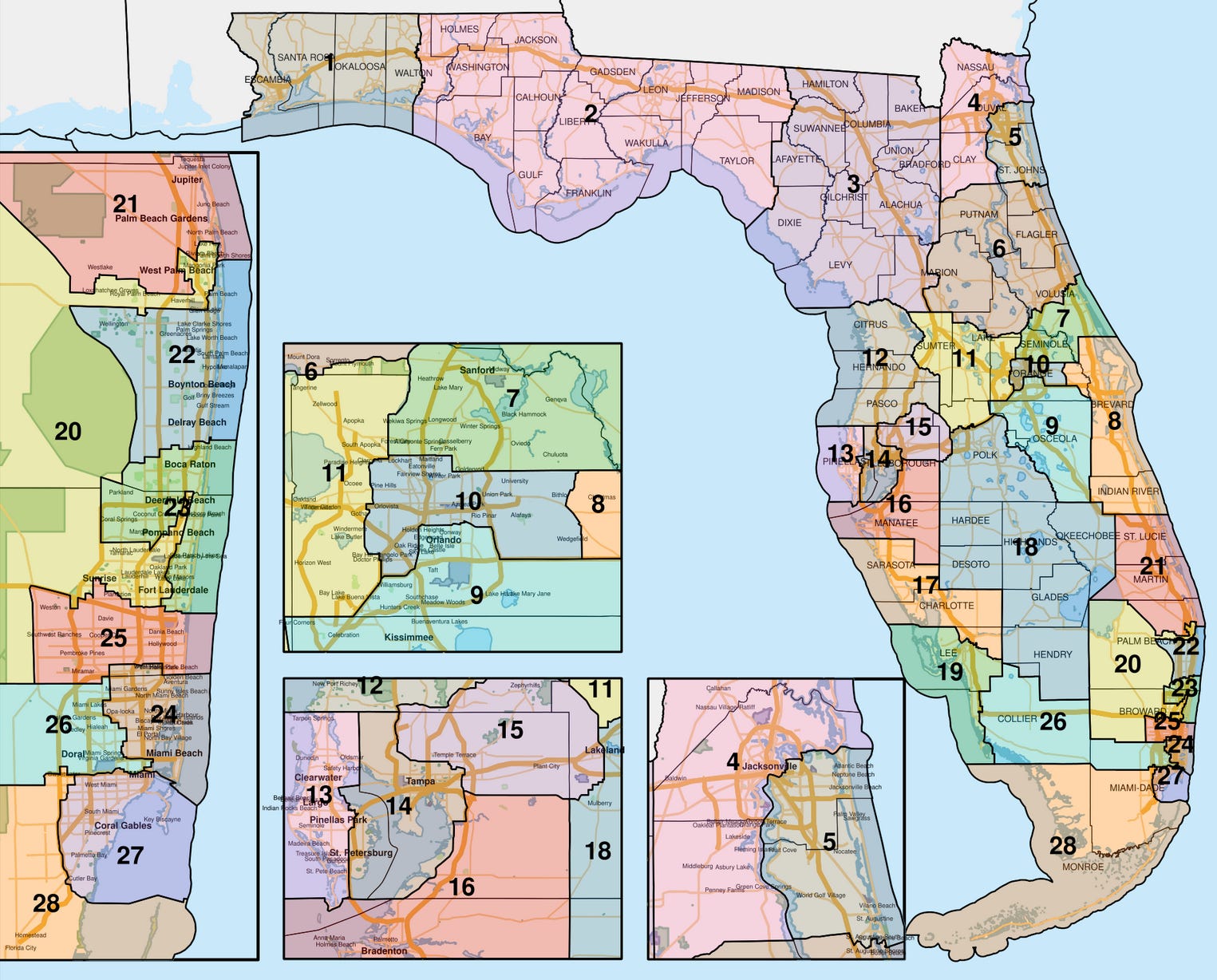
Last summer, President Donald Trump directed Republican-controlled states to redistrict to add more seats for them in the U.S. House of Representatives as Republicans face losing the chamber in the midterms. Seven Republican states have already passed or attempted to pass new House maps for the midterms.
Democrats in Virgina and California have responded to the threat from Republicans by putting constitutional amendments to voters to redistrict their states mid-decade. Voters have approved these measures in both states.
Now, Republican-controlled Florida heads into a Special Session next week to consider redistricting U.S. House Districts in response to voter-approved redistricting in California and Virginia. Gov. Ron DeSantis first called the Special Session for mid-decade redistricting in January 2026. Due to the legal and political complexities, the Special Session has been repeatedly delayed.
Passing a new map in Florida is not as straightforward because of Article III, Section 20, Standards for Establishing Congressional District Boundaries, of the Florida Constitution, known as the Fair Districts Amendments, approved by Florida voters in 2010. The provision prohibits drawing districts during redistricting to favor a political party or incumbent. Gov. DeSantis faced charges he violated the Fair District Amendments in 2022 but managed to survive the legal challenges by relying on his appointees to the Florida Supreme Court.
Any new proposed Florida map has to contend with Gov. DeSantis’ already heavily-gerrymandered map passed in 2022. Florida has a total of 28 U.S. House Districts. Republicans already control 20 Republican-leaning districts as a result of the gerrymander. Democrats are tightly packed into 8 districts, and there is little room to create fewer of them. If Florida Republicans squeeze them further, they run directly afoul of the Fair Districts Amendments.
But why and how?
Because their proposed map favors one political party over another and their incumbents, an illegal practice in Florida. It’s the only purpose of redistricting for Florida Republicans from the 2022 map. Absent the motive to favor Florida Republican U.S. House incumbents, there would be no redistricting in the middle of the decade in the state.
Couple the district packing plan with Gov. DeSantis’ open acknowledgment Florida Republicans wanted to see what would happen with the Virgina Redistricting amendment before moving forward with the Special Session, causing delays, and it further lays bare the new map is only meant to favor the Florida Republican Party.
Stated intentions to design and implement a congressional map for Republicans coupled with direct acts to carry out those intentions to favor one party in response to their political opponents in another state are subject to the Florida Constitution’s prohibition on drawing districts to favor one political party or incumbent.
Either element has to be satisfied to trigger the Fair Districts rules, and since only one party would be favored by new maps in 2026, the first element of favoring a political party has already been satisfied. We already proved one element. We could end there, but we can also satisfy both elements, since all U.S. House Republican incumbents would benefit from the packing of Democrats into fewer districts. It means the resulting legal conclusion can only be the Governor and Legislature planned to draw these districts in direct contradiction to Article III, Section 20 of the Florida Constitution. Every Republican member of the Legislature is also an incumbent who is favored by any new maps passed by the Legislature when they are specifically drawn to give them more seats and power in Congress in response to out-of-state Democrats. That also helps a future Republican governor.
It gets even worse. The Governor issued a new proclamation this month to accommodate one political party, Republicans, potentially avoiding drawing a new map if an electoral outcome in another state didn’t benefit their political party. After issuing a single-subject proclamation in January, the Governor issued a new Special Session proclamation in April, cobbling together other subjects that were meant to accommodate and benefit his party in the midterms. It shows the Special Session was called for the purpose of drawing new Republican districts or passing legislation to politically benefit one party and one party only — Republicans. The Florida Constitution forbids such a scheme because voters recognize the practice where one party and that party’s incumbents draw a map to give them one or more seats to favor their party is not fair representation, and therefore antidemocratic, so they approved a constitutional provision to prohibit such antidemocratic acts by the Legislature to protect fairness in representation, only allowing the Legislature to draw districts producing fair districts for all voters, not politicians and their political parties.
DeSantis has already fought a bruising court battle that strained the credibility of the Florida Supreme Court by allowing DeSantis to take 20 seats for Republicans in 2022 and dilute the votes of Democrats in the 2022 maps. It’s unclear the Florida Supreme Court could credibly say such an act as mid-decade redistricting for Republicans complies with the Fair Districts Amendments, since the measure and acts surrounding it blatantly favor Florida Republicans. The Florida Supreme Court case decision from 2025 approving the 2022 maps had far different facts from mid-decade redistricting. It would strain legal credibility to say the new map is not to favor one political party over another and their incumbents when that’s the stated intention, purpose, and outcome of the exercise.
All in all, Democrats may flip some Republican seats and end up with more of them after November. It is a huge gamble for Gov. Ron DeSantis. Florida legislative leaders have signaled they are not on the same page as Gov. DeSantis when it comes to a new map. Some U.S. House incumbents are not on board with imperiling their seats with the gambit. Passing new maps takes huge risks for Republicans that could impact how their party performs nationally and in Florida.
DeSantis may harm his legal credibility, lose more U.S. House seats for Republicans, and imperil the Florida Republican agenda by trying to save Republicans across the country from the unpopularity of Trump.